
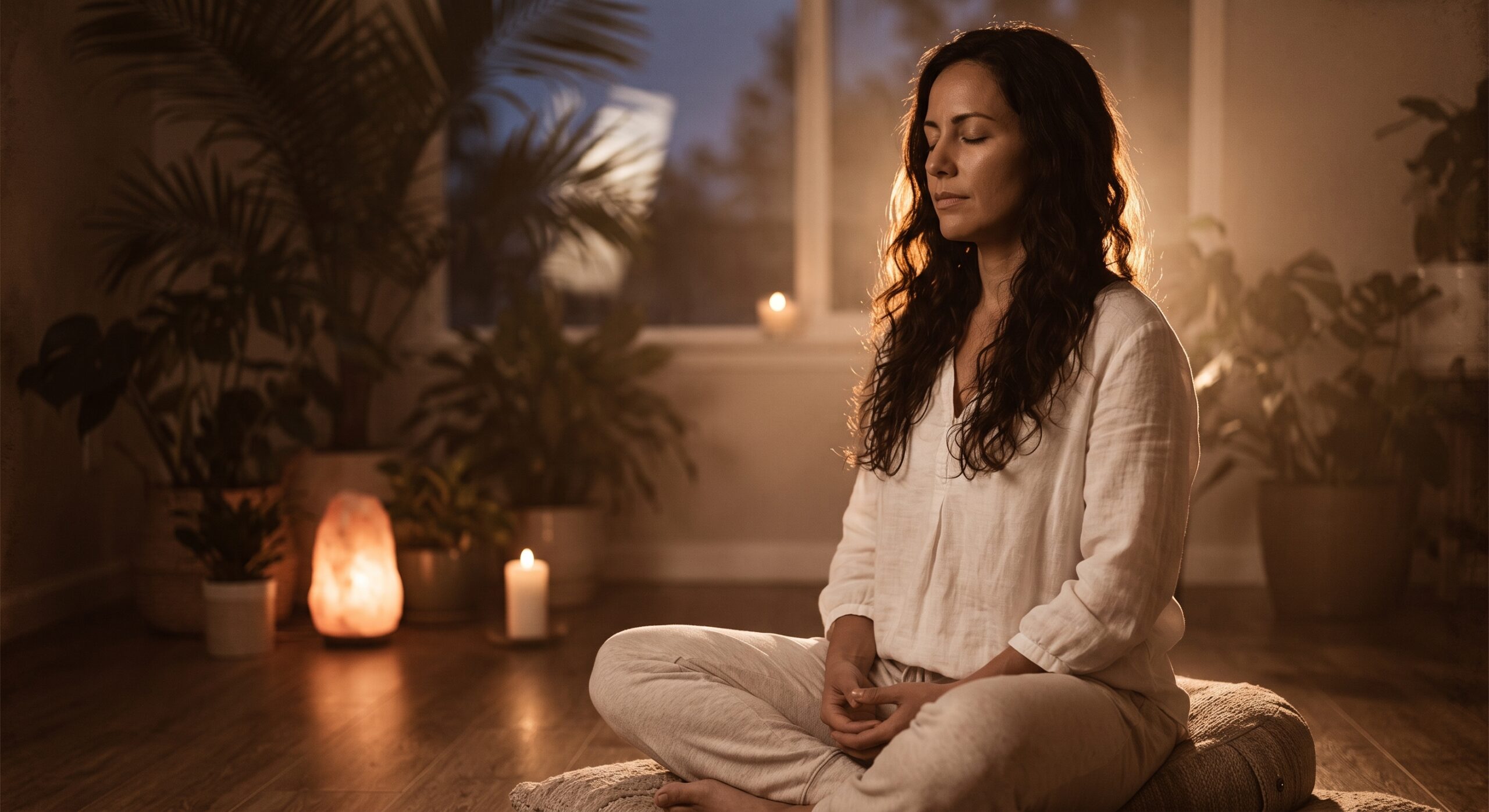
Breathwork for Sleep: Techniques to Calm the Bodyat Night
Breathwork for Sleep: Techniques to Calm the Bodyat Night
Move · Breathe · Heal
If your mind races the moment your head hits the pillow, breathwork can be one of the fastest
ways to change that — not because it distracts you, but because it directly influences your
physiology. Breath is the one autonomic function you can consciously control, which makes it a
direct line to your nervous system’s rest response.
Here are the most effective, research-informed breathwork techniques for sleep, along with how
and when to use each one.
Why Breath Works So Well for Sleep
Every breath cycle has a natural rhythm: inhaling slightly speeds the heart rate, and exhaling
slightly slows it. This is a normal, healthy pattern called respiratory sinus arrhythmia. When you
intentionally lengthen your exhale relative to your inhale, you’re using this mechanism to actively
stimulate the vagus nerve and shift your body toward its parasympathetic, “rest and digest” state
— the state sleep depends on.
This is why almost every effective sleep-breathing technique shares one feature: the exhale is
longer than the inhale.
Four Techniques to Try Tonight
- Extended Exhale Breathing
Best for: general nightly use, beginners
Inhale through the nose for a count of 4. Exhale slowly through the nose or mouth for a count of
6–8. Repeat for 8–10 rounds.
This is the simplest and most sustainable technique to build into a nightly routine. There’s no
holding involved, which makes it accessible even on nights when your body feels tense or
resistant to structure. - 4-7-8 Breathing
Best for: a racing mind, higher intensity nights
Inhale through the nose for 4 counts. Hold the breath gently for 7 counts. Exhale slowly through
the mouth for 8 counts, with a soft whooshing sound. Repeat for 4 rounds to start, building up to
8 as it becomes comfortable.
The extended hold and long exhale make this one of the more potent vagal-activating patterns.
If you feel lightheaded, shorten the counts proportionally (e.g., 2-3.5-4) — the ratio matters more
than the exact numbers.
3. The Physiological Sigh
Best for: sudden anxiety spikes, a mind that won’t stop looping
Take a full inhale through the nose, then, at the top of that inhale, sneak in one more short,
sharp sip of air. Follow with a long, slow, audible exhale through the mouth. Repeat 2–3 times.
This double-inhale pattern is one of the fastest-acting tools for discharging acute stress
activation — useful in the moment you notice your thoughts spiraling, even before you’re ready
for a longer practice.
4. Box Breathing
Best for: a mind that needs structure to focus on
Inhale for 4 counts, hold for 4, exhale for 4, hold for 4. Repeat for several rounds.
While this doesn’t emphasize a longer exhale the way the others do, its even, predictable
rhythm gives a busy or anxious mind something structured to follow, which can be more
effective than open-ended stillness for some people.
How to Build Breathwork Into a Sleep Practice
- Get into position first. Lie down in bed, or sit comfortably beforehand if you find lying
down makes you sleepy too quickly to focus. - Keep the jaw and shoulders soft. Tension here often mirrors mental tension;
consciously releasing it supports the practice. - Don’t force the count. If a pattern feels straining, shorten it. The goal is ease, not
achievement. - Let sleep happen, don’t chase it. If you’re still awake after 10–15 minutes, that’s fine
— continued slow breathing is restful for the body even without sleep arriving
immediately. - Practice consistently. Like any nervous system tool, breathwork becomes more
effective with repetition, as your body learns to associate the pattern with the shift into
rest.
A Note on Practice
Breathwork isn’t about forcing your body into calm. It’s about offering it a clear, repeatable signal
— through the exhale — that it’s safe to let go of the day. Some nights that signal will work
quickly. Other nights it will simply soften the edges. Both are valuable.
Recent Post
Breathwork for Sleep: Techniques to Calm the Bodyat Night
August 15, 2026

Polyvagal Theory, Explained Simply
August 15, 2026